
Human Brain
The human brain is a complex organ that allows us to think, move, feel, see, hear, taste, and smell.
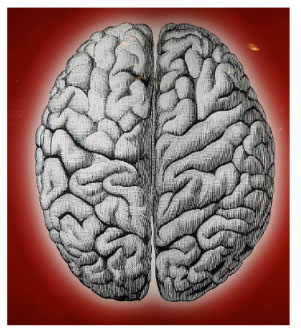
Understanding the Human Brain
The human brain is a complex organ that allows us to think, move, feel, see, hear, taste, and smell. It controls our body, receives information, analyzes information, and stores information (our MEMORIES)
Development of Right Brain
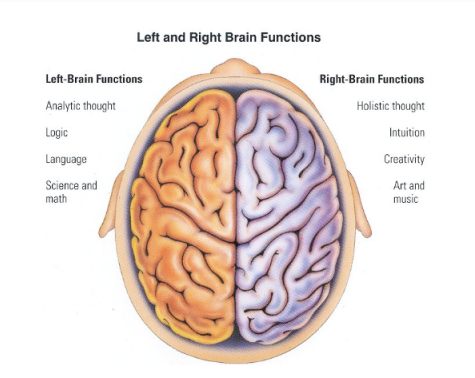
The human brain consists of the right brain and the left brain. In the abacus method of mental calculation, the learners manipulate abacus beads in their head to carry out a calculation.
The shapes of these two parts are similar, but differences have been gradually found in their functions. The left brain is also referred to as the digital brain. It controls reading and writing, calculation, and logical thinking. The right brain is referred to as the analog brain. It controls three- dimensional sense, creativity, and artistic senses.
Both the brains work together to allow us to function as humans. In the abacus method of mental calculation, the learners manipulate abacus beads in their head to carry out a calculation. This had led us to speculate that this operation was effective in training the right brain or the analog brain.
Not only for the experts but also for the beginners, abacus learning is useful to easily grasp images in addition and subtraction problems, because the beads are moving in front of their eyes. It also allows understanding the decimal system and the concept of digit positions.
Once children understand numbers, they will probably become fond of mathematics. They will be more confident there may be many positive impacts in other subjects at school
Effects & Advantages of Abacus learning
- The first effect is
improvement of numerical memory - The second effect is
improvement ofimage memory - The third effect is progress in solving general mathematical problems